The Ring of Fire
Nonfiction · Earth Science1In 1980, a small earthquake happened near the base of Mt. St. Helens in Washington, which is a state in the United States. The earthquake caused the northern side of the mountain to slide down the hill. Then, the mountain erupted. Lava and rock flew down the mountain, destroying everything in its path. A thick plume of ash and smoke rose 80,000 feet into the sky.
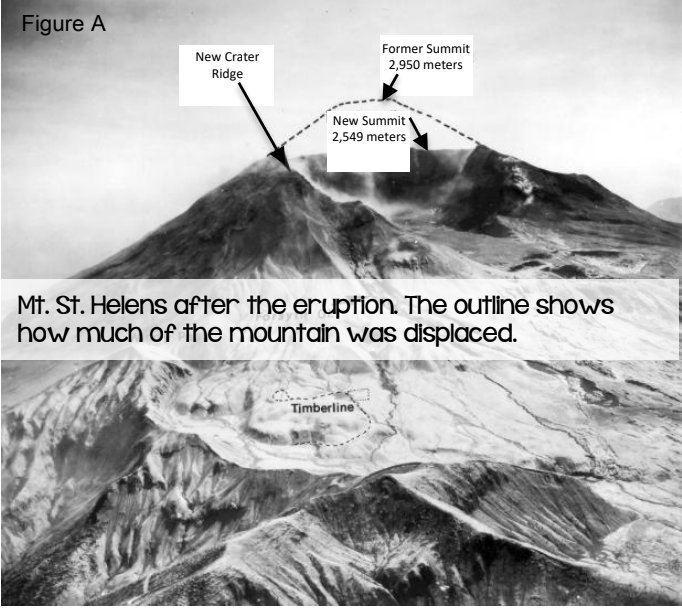
2Mt. St. Helens is an active volcano. The 1980 eruption was the largest ever in the mainland United States. There are not many volcanoes in the United States. Most volcanoes in the world are dormant, or sleeping. In the United States most active volcanoes, like Mt. St. Helens, are found on the West Coast or in Alaska or Hawaii.
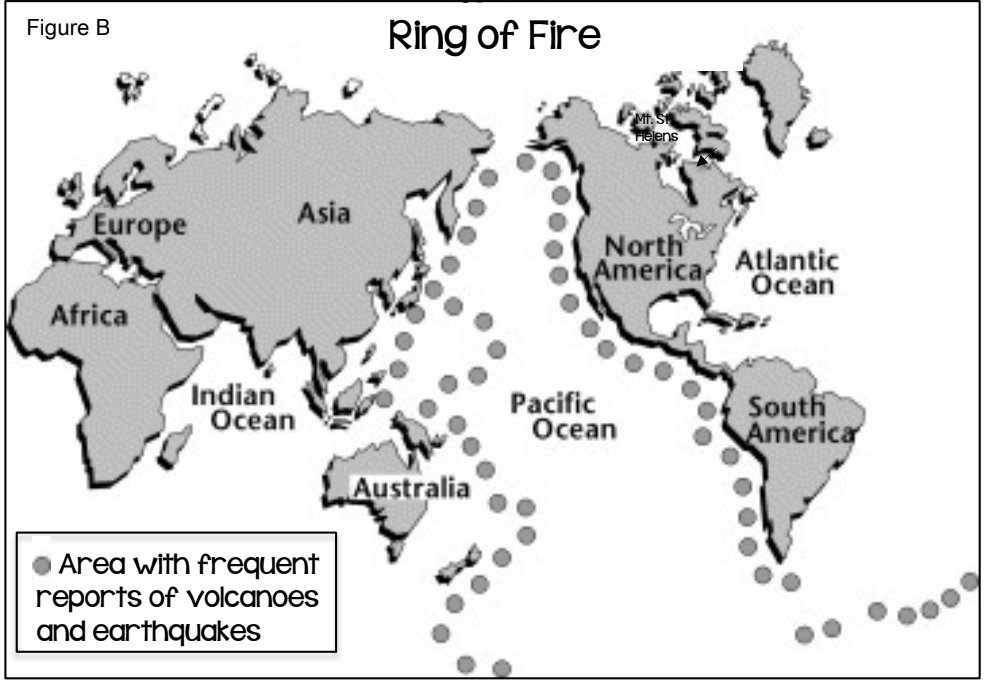
3Alaska and the West Coast are in what is called “The Ring of Fire”. This is a giant ring that circles the Pacific Ocean. The Ring of Fire has 452 volcanoes. These are a mix of dormant and active volcanoes. The Ring of Fire is also where nearly all of the world’s earthquakes happen.
4Earthquakes and volcanoes are closely related. They both happen because of changes underneath the surface of the earth. Under the surface there are large plates of Earth’s crust, called tectonic plates. These plates move and bump into each other. This can cause earthquakes. Fortunately, the plates move very slowly, so this does not happen very often.
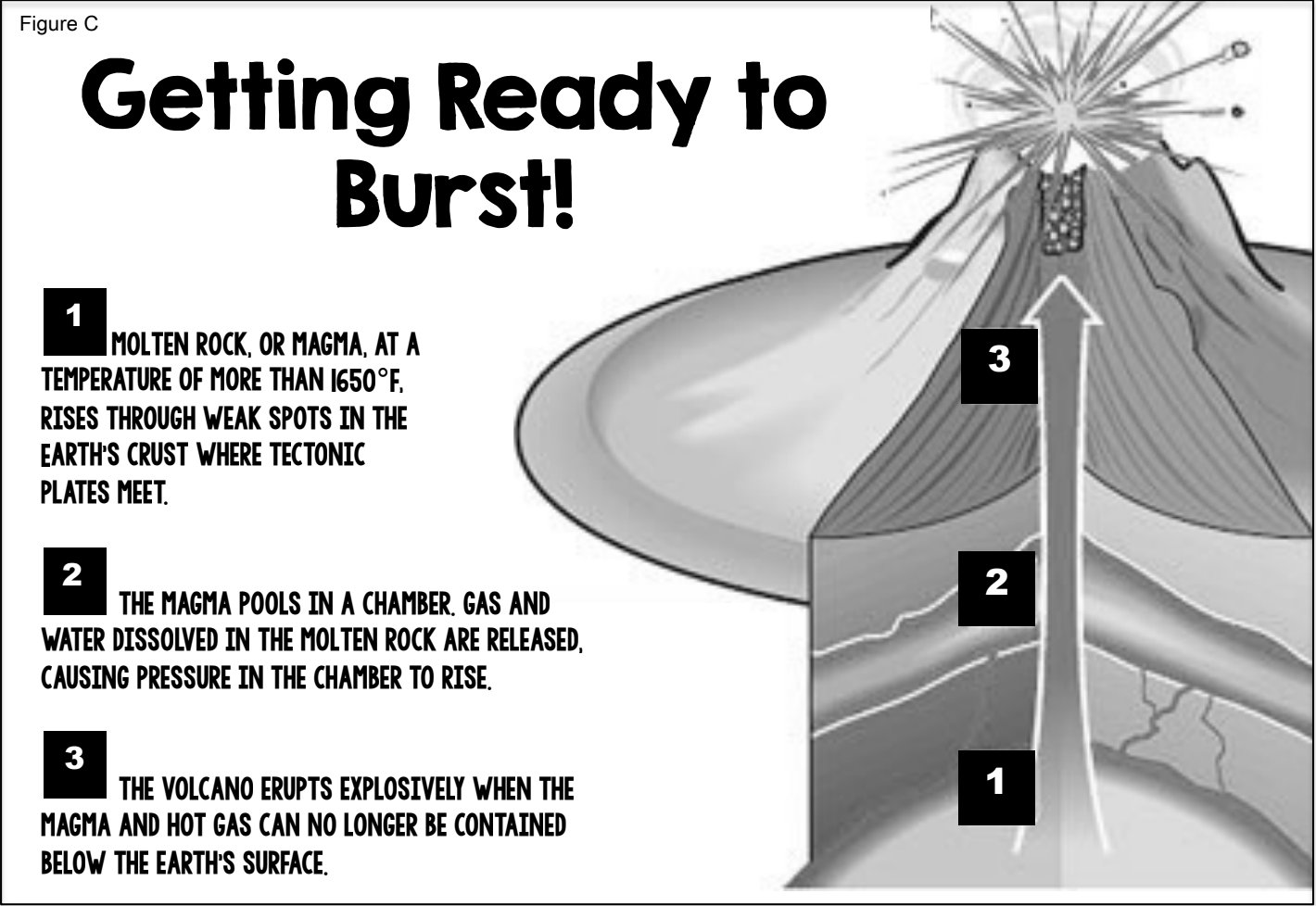
5The movement of tectonic plates can create gaps where melted rock called magma can pool. Magma is super hot rock that can flow like water. Volcanoes happen when a lot of magma pushes against the tectonic plates. With a lot of pushing, it can explode. The tectonic plates in the world that move the most are those in the Pacific Ocean. Because they move so much, there are more volcanoes and earthquakes in the Ring of Fire than anywhere else in the world.